Online Learning Was Supposed to Save You Money. Then Came the Setup Bill.
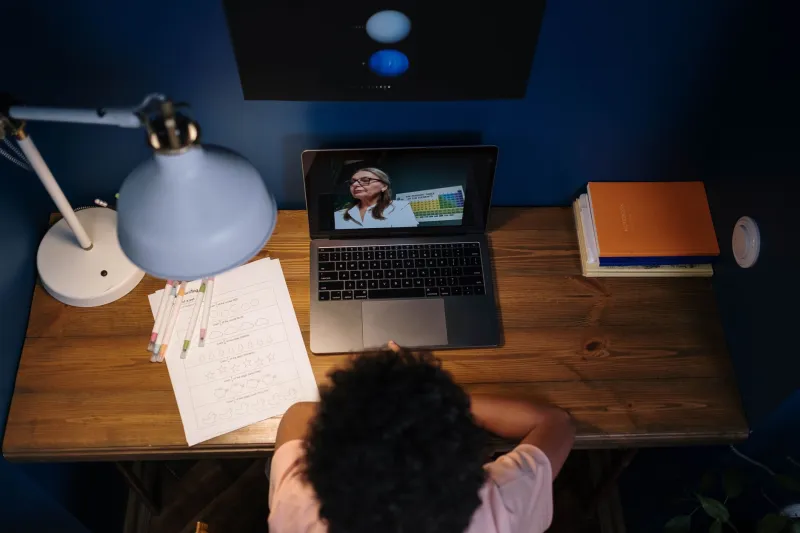
The pitch for online education is clean and compelling: no commute, no campus fees, flexible scheduling, and — the one that really hooks families — lower cost. And compared to in-person tuition at a four-year university, online programs often do charge less. But "less than a dorm room at Northwestern" isn't the same as cheap, and the actual household cost of making online learning work is something most families only discover after they've already committed.
We're not here to talk you out of online learning. For millions of students and families, it's the right call. But the budget math deserves an honest look — including all the line items that don't show up in the enrollment brochure.
The Bandwidth Problem
Online learning is, at its core, a bandwidth-intensive activity. Video lectures, live Zoom sessions, collaborative tools, and cloud-based assignments all require a reliable, fast internet connection. The Federal Communications Commission currently defines broadband as 25 Mbps download speed — a threshold that sounds fine until you have two students in simultaneous video calls and a parent trying to work from home.
For households already running fiber or high-tier cable, this might not be an issue. But roughly 19 million Americans still lack access to broadband, and millions more have plans that technically qualify as broadband but struggle under real-world household load. Upgrading from a basic plan to one that handles concurrent video streaming reliably can cost $30 to $60 more per month, or $360 to $720 per year. That's a budget line that doesn't appear anywhere in an online program's advertised cost.
For rural families, the situation can be worse. Satellite internet options like Starlink have improved dramatically but still run $120 per month or more — a significant overhead cost for a family choosing online learning partly to save money.
The Hardware Refresh Nobody Planned For
Most families assume the laptop they already own will handle online coursework. Sometimes that's true. Often it isn't. A five-year-old machine running a browser-heavy learning management system while supporting video calls and multiple open tabs will frequently lag, crash, or simply fail to run required software.
A reliable mid-range laptop suitable for online learning — think a current-generation Chromebook for K-12 work, or a Windows or Mac laptop for college-level coursework — runs $400 to $900 depending on the program's requirements. Add a decent webcam if the built-in camera is poor quality ($50 to $150), a headset for clearer audio in virtual classes ($30 to $80), and a second monitor if your student is doing serious coursework ($150 to $300), and you're looking at $630 to $1,430 in hardware that wasn't in the original budget.
Some schools provide equipment stipends or loaner programs, but these are far from universal. It's worth asking before enrollment — not after.
Ergonomics: The Expense That Sneaks Up on You
This one sounds optional until it isn't. Students spending four to eight hours a day at a desk — especially younger kids whose bodies are still developing — need a setup that doesn't cause physical strain. A kitchen chair pulled up to a coffee table works for a week. It doesn't work for a semester.
A basic ergonomic desk chair runs $150 to $400. An adjustable desk, especially important for growing kids, adds another $200 to $600. Good lighting to reduce eye strain — particularly important for late-afternoon sessions when natural light shifts — might mean a $40 to $100 desk lamp. These aren't luxury purchases; they're functional requirements for sustained online learning, and they add up to $390 to $1,100 in setup costs that families rarely budget for upfront.
The Supplemental Tutoring Feedback Loop
Here's the cost that catches families most off guard: some students simply don't learn as effectively on screens. Research on online learning outcomes — including a large-scale study from Stanford's Center for Research on Education Outcomes — consistently finds that students in fully online environments show smaller learning gains on average than their in-person peers, with the gap most pronounced for younger students and those with learning differences.
For families who chose online learning to save money, discovering that their child needs supplemental tutoring to keep up is a painful irony. In-person tutoring runs $40 to $150 per hour depending on subject and market. Even two sessions per week at the low end adds $320 to $480 per month — potentially more than they saved by switching to an online program in the first place.
AI tutoring tools can reduce this cost somewhat. Platforms like Khan Academy's Khanmigo or dedicated AI math coaches run $10 to $30 per month. But they're not a universal substitute for human instruction, and families often end up paying for both.
Productivity and Focus Tools: The Subscription Layer
Online learners frequently need tools their in-person peers don't. A PDF annotation app for digital textbooks. A noise-canceling app to block household distractions during live sessions. A task management platform to replace the structure that a physical classroom provides. A VPN if the program requires access to institutional resources.
Individually, these subscriptions are small — $5 here, $10 there. Collectively, they form a layer of recurring monthly costs that can add $30 to $80 per month to a household's education spend. That's another $360 to $960 annually, and it's almost never factored into the "online is cheaper" calculation.
Doing the Real Math
Let's put some numbers together for a family with one college student switching from an in-person community college to a fully online program:
- Internet upgrade: $480/year
- Hardware refresh (laptop + webcam + headset): $700 one-time
- Ergonomic setup (chair + lighting): $350 one-time
- Supplemental tutoring (2x/month at $60/session): $1,440/year
- Productivity subscriptions: $600/year
First-year total overhead beyond tuition: roughly $3,570. In subsequent years, the recurring costs alone — internet, tutoring, subscriptions — run about $2,520.
That doesn't mean online learning isn't the right financial choice. It might still be, especially if tuition savings are significant. But "online saves money" is only true if you're comparing full costs — not just the tuition line on the enrollment page.
Before you sign up for any online program, build out the full household budget. The real price is almost always higher than the advertised one, and knowing that upfront is the only way to make a decision you won't regret three months in.